
 What's the difference between a "white pinot noir" and a rosé of pinot noir? It's a difficult question to answer, given that many labeled as white have a pinkish hue and even perform like rosé, and the techniques for making such wines are manifold. And some wineries may simply want to avoid the term rosé for marketing purposes.
The amount of maceration time may be a good place to start. If the juice was macerated with the skins for a few hours, then it's probably a rosé. If the juice was separated as quickly from the skins as possible during pressing, then it's probably safe to call it a white, regardless of its final color.
Of course, I'm not a winemaker and I've surely oversimplified the matter, so anyone who wants to clarify (or complexify) matters should weigh in.
On the other hand, I am a wine drinker, and I can tell you I've never had a rosé of pinot noir that resembled the 2005 Dirler Pinot Noir Cepage Pinot Noir. I cannot find any information about how, exactly, this wine was made, but Dirler is my favorite Alsatian producer* and if they make it, I'll buy it. Still, I was taken aback by this wine's distinctiveness.
It's the color of rose petal-macerated cantaloupe drippings, quite lighter in color than most rosés, and its nose really sets it apart; it reminds me of the more delicate style of skin contact whites such as those made by Paolo Bea. I smell apple skins, dried strawberries, freshly sliced oranges, and fresh tarragon. It's beautifully complex on the palate, with an extremely subtle earthiness that haunts the red fruit, musk melon, apple, herb, and Xmas spice flavors. And if that weren't enough, the Cepage Pinot Noir has a mouthcoating viscosity that's practically weightless, and the finish is fresh, perfectly balanced, subtly mineral, and very, very long.
I wish I knew more about how this wine was made. But if more knowledge would enhance my awe, I'm more than happy to just have the awe.
* Caveat that I've really only tasted from a handful of Alsatian producers
Sunday, October 4, 2009
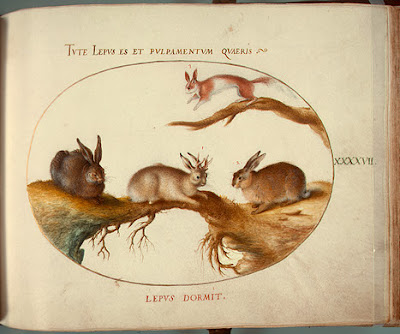
Griffin or Jackalope?
Monday, August 10, 2009
Infanticide Is Painless
 Lately I've been opening some nice bottles before their time. Willful infanticide, yes, but I've been in the mood to drink great wine and I've been wanting to conduct a real-world test on how the wines are holding up and how they will likely evolve, rather than rely on received wisdom, no matter how well-informed that wisdom might be.
Château Pradeaux Bandol 2003
I'm well aware of this wine's typical lifespan — due in part to the mourvèdre grape's ability to resist oxidation, but largely due to Pradeaux's traditional, uncompromising winemaking regimen — but I figured I figured I should check in to see how this wine weathered the heat of 2003. Would this be an early drinker?
Um, no. Turns out this is classic Pradeaux, and you'd never know this came from a hot vintage. Which isn't to say it's impenetrable, for behind the wall of tannins this 6 year old shows great beauty, with a spicy, smoky nose of blackberries, pepper, grilled meat, and subtle hints of lavender and fresh green herbs. The balance, structure, and acidity here are impeccable, and if the tannins are rough and grip the tongue even on the fourth night sampled, the texture shows great grace and layers of purple flowers, silky cherry (fresh and dried, sweet and tart) and blackberry fruit. So, still tight, but complex and complete; it's definitely showing what it will become, particularly if given the ten-plus additional years it deserves.
Huët Le Mont Demi-Sec 2002
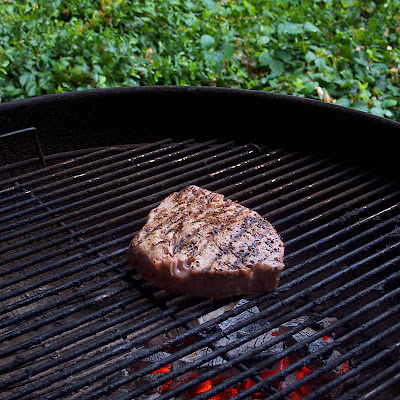
Why oh why does one of my favorite wines in the world have to be corked? Gah! And I had prepared an ahi steak with oil, salt, pepper, crushed cumin seed, and Italian salsa verde (flat parsley, oil, caper, and lemon zest) for the occasion. Instead, we waited another 20 mins to fire up the coals as we chilled down a bottle of...
Dirler-Cade Riesling Grand Cru Spiegel 2004
While I've never had a Trimbach, Dirler is my Alsace superstar, as their biodynamically-raised wines are so well proportioned, without the rock-em sock-em richness and residual sugar that so many other Alsatians bring to the table. That said, on nights two and three this shows a lot of baby fat and banana stank; in that respect it's not at all like the non-cru Bollenberg 2004, which has not one ounce of fat.
Before and after that awkward phase, though, this has an unbelievable combination of intensity, clarity, and purity. On the nose, a cornucopia of orchard and tropical fruits tumble onto acres of mountain stone; meanwhile, the farmer next door refills the kerosene tanks in his pickup truck. This is true even when the glass is empty. The body is very creamy and feels full on the tongue yet floats above it; it's warm and friendly yet delicate and poised; I'm thinking Grace Kelly or Michelle Obama. It's completely dry and very precise, with great structure, while plush fruit and filigreed minerals haunt the long finish.
My ultimate verdict: wait another five years before opening, then serve with a poached something-or-other in buerre blanc — this Spiegel was slightly overwhelmed by the fleshy tuna.
Renaissance Cabernet Sauvignon Première Cuvée 1995
Whereas many producers' tête de cuvées come from extra-ripe grapes or are lavished with expensive new oak, Renaissance does none of that. Instead, they pick and raise their best lots much the same way they raise their basic wines and let the terroir speak.
This isn't quite infanticide to drink this now. It's more like cutting a man down in his 30s (chilling enough, don't you think?). But over the course of three nights, this wine, which is 24% merlot and a mere 12.4% abv, proved that it will just get better. It kicks off with intense aromas of plum pudding, beef broth, black pepper, gray sea salt, blackberries, blueberries, and spice cake. It's structured yet velvety (more velvety than the "standard" 1995 cabernet), with a preliminary attack of sweet black fruit quickly giving way to bold tannins and a more austere rendering of the fruit. A note of cherry rings on the bright, brothy finish, and its spiciness is quieter compared to several other Renaissance wines, although a white pepper note lingers with the tannins for some time.
This is elegant and balanced, and the little bit left on night three shows a slight melting of the tannins and hints of blackcurrant and dried fruit on the palate. Although this was really good with the lamb that I grilled, it would have been even better had I decanted it 24 hours before serving.
Saturday, April 18, 2009
Dirler Riesling Bollenberg 2004
 I am generally skeptical of effusive happy talk, so I'll just warn you in advance that I have had a series of remarkable wines that can only encourage purple prose.
For example, I cast as cold an eye as possible on the Dirler Riesling Bollenberg 2004, but all I could think was, "How can such a ridiculously beautiful, delicate, and multifaceted wine not be from a grand cru vineyard?" Dirler is a producer that never boarded the residual sugar train and while not austere, this frankly doesn't even show a lot of fruit. What this does show is an elegant and classic minerality. That is, it doesn't taste particularly eccentric, nor is the acidity particularly sharp. Rather, it's a dry and remarkably transparent wine with great length that pairs brilliantly with a wide variety of food, from pan-seared pork to steamed green beans.
The nose shows crisp green apple along with subtle hints of petrol, melon, and cow milk cheese. OK, there is a rush of fruit to the palate at first, but this is one of those rare cases where delicacy is aggressive, as the fruit is quickly supplanted by that gorgeous, filagreed, and very long minerality, courtesy the pink sandstone that surrounds the village of Bollenberg.
On the other hand, the white orchard fruit does show prominently when paired with a firm, slightly aged, and deliciously creamy goat cheese from the Pyrenees called chabrin. I thought of this wine when I smelled the cheese in the store, yet I got more from the pairing than I bargained for.
Friday, March 20, 2009
BSG Bubbles

The Château d'Orschwihr Crémant d'Alsace is the perfect solution!
The bottle I drank earlier this month was fresh and alive and subtle. It's aged on its lees for three years, which gives it a lot of creamy depth. Apple, nuts, yeast, and poached pear show up on the nose — lovely stuff. The mousse is robust and fine, sweet crunchy white fruit shows on the attack, the palate is creamy, and it all finishes with subtle toast and toffee notes along with a vivacious minerality and lingering apple cider acidity. Unfortunately there's no info on composition or disgorgement dates ("L. 9002" is in tiny print on the back, if that means anything) but in any case, this $20 sparkling wine is a fabulous value and just what I need.
Goodbye Kara Thrace, goodbye Adamas Lee and Bill, goodbye President Roslin, goodbye Caprica Six, goodbye goodbye goodbye. We'll be raising a glass to y'all.


 Posts


