
 Since Eric Asimov recently complained about the dearth of sémillon in the US, I figured this would be a good time to check in on two sémillon-based whites from Renaissance: a varietal bottling and a Bordeaux style blend of sémillon and sauvignon blanc.
I share Eric's complaint. Yep, I've been subjected to candied, stanky, pineapple-rotting-on-rainforest-floor white Bordeaux and faux Bordeaux, but in its minerally and elegant forms, I dig the way the creamy body of sémillon joins the grassy attack of sauvignon. And done right, a touch of aging in oak enhances rather than masks these qualities.
It would be absurd to compare a Pessac-Léognan with these Sierra Foothills wines. Vines planted in humid, gravelly Graves will of course yield something quite different than vines planted in decomposed granite marl in the high elevation, semi-arid hills northeast of Sacramento. Besides, Renaissance aims for balance, restraint, and transparency on their own terroir's terms, and that's just what we get.
Renaissance Carte d'Or 2007
Though a year younger than the below varietal bottling, this blend of 60% sémillon and 40% sauvignon blanc is easier to appreciate in its youth, thanks to a fruitier attack, a rounder profile (at 14.2% abv, it's two degrees above the sémillon), and the immediacy of the sauvignon. Part of the immediacy is conveyed to the nose, which like the 2006 Carte d'Or shows soft, grassy notes. But you might be surprised that the sauvignon also delivers white pepper and ginger spice to the palate, a quality that was obvious when I tasted young, unblended sauvignon from barrel last fall. As with the 2006 bottle that I liked so much, this marries sweet juicy peach flavors with savory herb notes, medium body with a round mouthfeel, and minerals and spices that last quite nicely on the tangy finish. It's a nice wine to drink with simply prepared fish.
Renaissance Sémillon Vin de Terroir 2006
Varietal sémillon is rarely giving in its youth. With time, it's apt to show herb, smoke, and honey characteristics, although attention must be paid to determine how it will evolve. And as Renaissance make wines with an eye toward the far horizon, it's doubly true for this wine, which rolls stones across the palate and clocks in at a mere 12.3%. Currently the aromas convey quite subtle notes of lemon, smoke, and almond. The wine's true character comes out on the long and mineral palate, where the creamy yet lifting body resolves into nicely focused flavors of meyer lemon, nuts, dried green herbs, and ginger zest. (If you're looking for fruit cocktail, look elsewhere.)
As to its future, the wine's complete presence is promising. The acidity and the minerals provide excellent structure and the wine is particularly full at midpalate without being fat; this is not a wine that will fade soon. That's fortunate, as it needs time to show greater depth and complexity. But from what I can tell, the future is promising.

 I was lucky enough to taste the
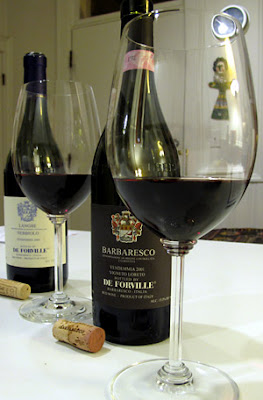 Barolo! Dolcetto! Asti, Alba, Langhe! This could be a cheer for the Piedmont, which more than any other wine region in the world — outside of the Loire, of course — showcases a stunningly diverse, interesting, and high-quality array of soils and grapes and wines. I adore so many of these wines when raised with care, from flirty Moscato d'Asti to zen-like Barolo, that it was difficult to choose the ones to drink and write about for the McDuff-hosted Wine Blogging Wednesday 54, "
